
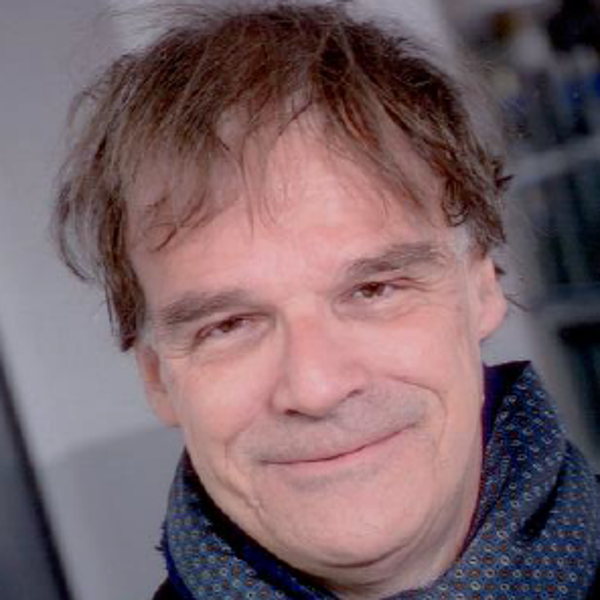
Dr. Philippe Knauth
Aix Marseille Université, France – ICNNFC 2027 Plenary Speaker
Pr. Knauth studied Chemistry at the Saarland University, Germany and graduated in 1984. He then received his PhD degree in 1987 from the Institute of Physical Chemistry at the same institution. After two years postdoctoral fellowship at the Centre for Thermodynamics and Microcalorimetry, France, and one year in industry at Bayer Co., he became CNRS researcher in 1990. He got his habilitation in 1996 and a Full Professor position at Aix Marseille University in 1999, where he is currently director of the Chemistry Department. He has published more than 180 research articles in international journals.
Dr. Kristina Tschulik
Ruhr University Bochum, Germany – ICNNFC 2027 Plenary Speaker
Kristina Tschulik studied chemistry at Technische Universität Dresden, where she also completed her doctorate in 2012. While pursuing her PhD degree, she worked at the Leibniz Institute for Solid State and Material Research and then as a postdoctoral Marie Curie Intra European Fellow at the University of Oxford. After a research stay in Johannesburg, South Africa, she joined Ruhr University Bochum in September 2015 – initially as junior professor in the team of the Resolv Cluster of Excellence, funded by the NRW Returning Professor Programme of the Ministry of Innovation, Science and Research. In 2017, Kristina Tschulik was a visiting professor at Université Paris Diderot in France, and has been Head of the Chair of Analytical Chemistry II at Ruhr University Bochum since June 2018. With her ERC Grant, she intends to study individual nanoparticles in order to optimize them for catalysis. The project starts in 2021.
Dr. María Bernechea
Universidad de Zaragoza, Spain – ICNNFC 2027 Keynote Speaker
Dr. Bernechea joined the Institute of Nanoscience of Aragon in 2017. Before she was working as lecturer at Cardiff School of Engineering were she joined in 2016 from the Institute of Photonic Sciences. She has a broad research experience, covering different areas of chemistry and materials science. She is interested in the development of materials for clean energy applications such as solar cells, thermoelectric devices, or photocatalysis.
Dr. Bernechea obtained her PhD in 2006 for her work on organometallic chemistry. After that, during her postdoctoral experience she gained knowledge about the synthesis and characterisation of nanomaterials.
She worked on the synthesis and characterisation of metallic nanoparticles for their use in catalytic processes, such as C-C coupling reactions in water or as electrocatalysts in polymeric membrane fuels cells.
In the last years she has been working on the synthesis of colloidal nanocrystalline semiconductors for their use in optoelectronic devices such as photodetectors and solar cells. In this field, one of her main areas of interest has been the development of materials based on non-toxic, earth-abundant elements for their use in environmentally friendly, low-cost solar cells.
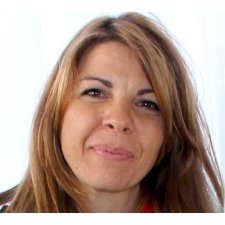
Dr. Isabella Nicotera
University of Calabria, Italy – ICNNFC 2027 Keynote Speaker
Prof. Isabella Nicotera is responsible of the PCAM-Laboratory (Physical Chemistry and Applied Materials). Her main research topic concerns Energetics sector, specifically materials for conversion and electrochemical energy storage devices, with particular reference to hydrogen and lithium (fuel cells, electrolyzers, batteries). The scientific knowledge therefore focusses on the synthesis and evaluation of new materials, hybrid and nano-structured with specific properties and transport, aimed at the development of polymer electrolyte membranes for fuel cells and for solid state batteries. The advanced techniques of the laboratory allow chemical-physical, rheological, electrochemical characterization of materials, and finally studies of the ionic and molecular transport mechanism through NMR spectroscopy (PFG technique, Relaxometry, micro-Imaging, solid state MAS-NMR). In the course of her research activity she established national and international collaborations with several research groups, as highlights from her publications, and she was involved in National and European research projects, some of them concerning conversion and storage of energy.